Don't Buy the Breville Eye Q Auto Until You Read This Full Analysis
Introduction
The Breville Eye Q Auto arrives in a crowded market of specialty coffee appliances that promise convenience, consistency, and a better cup with less effort. For buyers who prioritize automatic dosing, intuitive controls, and a compact footprint, an "auto" model can be very appealing. However, the decision to invest in any branded grinder or grinder-equipped appliance should be informed by how well its features translate into everyday performance, maintenance burden, and long-term value.
This article provides a thorough, practical analysis of the Breville Eye Q Auto aimed at typical buyers: home espresso hobbyists, busy households who want quick single-serve shots, and those upgrading from entry-level grinders. It covers how the product performs in real-world scenarios, what matters most to purchasers, a straight pros & cons breakdown, a comparison to other types of grinders, and a buying guide to help readers decide whether the Eye Q Auto fits their needs.
Product overview
The Breville Eye Q Auto is positioned as an automatic, user-friendly grinding solution. At a glance it emphasizes convenience features—presets or auto-dosing behavior, straightforward controls, and a compact design meant for countertop use. In an industry where grind repeatability and particle distribution directly affect extraction and flavor, automatic dosing promises to reduce the variability introduced by manual measurements.
For clarity: this review focuses on practical buyer concerns—how consistently the unit produces the grind needed for espresso and filter, how easy it is to clean and maintain, noise and speed trade-offs, and whether its convenience features genuinely save time without sacrificing quality.
Detailed product analysis
Build quality and ergonomics
On a functional level, buyers expect a robust hopper, a secure dosing chamber, and stable housing that resists vibration. The Eye Q Auto's chassis is designed for counter use and is compact enough for tight kitchens. Controls and indicators are placed for quick access; users upgrading from simpler grinders will appreciate labeled buttons and visual feedback for doses.
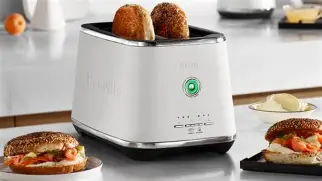
Ergonomics matters when loading beans, adjusting grind settings, and emptying grounds. Look for a hopper that locks firmly, a grind adjustment mechanism that fine-tunes without jumpy steps, and a chute or portafilter holder that aligns reliably. In everyday use, a well-designed ramp or chute reduces mess and frustration—especially when alternating between single shots and larger doses.
Grind quality and consistency
Grind uniformity and stability across repeated doses are the premiere attributes buyers watch for. For espresso, a fine and tightly distributed particle range is critical; for pour-over and immersion methods, a more open distribution may work better. The Eye Q Auto aims to balance these needs with an automatically measured dose and a burr set tuned for general purpose home use.
Practical buyers should evaluate whether the unit delivers consistent extraction in these scenarios:
- Repeated espresso shots during back-to-back brewing sessions (does the shot time drift?).
- Switching between espresso and coarse filter settings (is re-calibration required?).
- Small doses for single-serve vs larger doses for shared brewing (does the dose scale proportionally?).
Speed and noise
Home environments often balance speed with acceptable noise levels. Faster grind times reduce waiting and heat transfer in blades/burrs, but may introduce more noise. The Eye Q Auto targets a compromise: quick enough for household tempo while trying to keep hiss and grinding roar within normal kitchen tolerances.
Noise-sensitive buyers—early-morning households or shared apartments—should consider whether the noise profile is acceptable in context. A short, louder grind may be preferable to a quieter long-duration grind depending on tolerance and schedule.
Looking for the best Electronics deals on Amazon?
View Offers →Automation, controls, and ease of use
The auto features are the primary selling point. Auto-dosing eliminates the need for a scale or manual counting of time. Buyers who value convenience will appreciate presets and one-touch buttons. The control logic should be predictable: a set button should always produce the same approximate dose, and any "auto" adjustments should be transparent rather than opaque.
Look for:
- Meaningful feedback when doses change (LED indicators, counts).
- Ability to override presets quickly for experimental tweaking.
- Stable dose counts after repeated use without significant drift.
Maintenance and longevity
Grinder maintenance is commonly overlooked until performance degrades. Easy access to burrs for cleaning, a removable hopper that detaches without tools, and straightforward replacement parts (burr sets, seals) are important to long-term ownership. The Eye Q Auto should be evaluated on how simple it is to remove static-charged grounds, clear clogs, and replace wear components.
Users should also check warranty terms, availability of replacement parts, and the brand’s service support in their region—factors that dictate the appliance's true lifetime cost beyond the initial purchase.
Real-world use cases
Different buyers use grinders for different workflows. Below are practical scenarios and how the Eye Q Auto may fit:
- Single-operator home espresso: A user who pulls two espresso shots most mornings benefits from reliable presets and quick warmup. If the Eye Q Auto produces consistent timed shots with little manual adjustment, it will be a win.
- Households with multiple drink preferences: Families that alternate between espresso and pour-over need quick and easy grind conversion. The Eye Q Auto’s ability to switch settings without reprogramming or long clean cycles matters here.
- Small office or light commercial: If the unit is rated only for home use, continual heavy-duty cycles will accelerate wear. Buyers in small offices must consider duty cycle and whether a prosumer model is more appropriate.
- Beginner coffee hobbyists: For those learning the trade-offs of grind size vs extraction, clear controls and repeatable doses help accelerate the learning curve.
Pros & Cons
Pros
- Strong convenience model: auto-dosing reduces the need for a separate scale or manual timing.
- Compact countertop footprint suitable for small kitchens.
- Ease of use for users upgrading from basic blade grinders or entry-level burr units.
- Intuitive presets and one-touch operation that speed routine brewing.
- Designed for everyday household flow—quick doses, minimal setup.
Cons
- Automatic features can obscure manual control—advanced users may find limited fine-tuning.
- Potential for increased maintenance if grounds accumulate in dosing mechanisms; regular cleaning required.
- Not a substitute for high-end commercial grinders for heavy-duty or competition use.
- Users sensitive to noise should verify the grind profile in their environment.
- If switching between very different brew methods frequently, calibration or cleanup may be needed.
How the Breville Eye Q Auto compares
It helps to see the Eye Q Auto in context with common alternatives. The following table summarizes practical differences that buyers typically care about.
| Feature | Breville Eye Q Auto | Typical Manual Home Grinder | High-end Prosumer/Commercial Grinder |
|---|---|---|---|
| Primary strength | Automatic dosing and convenience | Affordability and simple control | Best consistency and durability under heavy use |
| Ease of use | High—presets and one-touch dosing | Moderate—manual timing or visual checks | Moderate—advanced settings but familiar to pros |
| Grind consistency | Good for home use; suited to everyday espresso and filter | Variable depending on burr quality | Excellent—narrow particle distribution and stability |
| Noise | Moderate; design varies by model | Lower for slow manual units; variable | Can be loud but fast—duty-optimized |
| Maintenance | Moderate—auto chambers need regular cleaning | Simple—fewer moving parts | Higher—but parts designed for longevity |
| Price relative value | Mid-range—premium convenience for home users | Low to mid—good for beginners | High—investment for serious users |
Buying guide: what to check before buying
Choosing the right grinder or grinder-equipped appliance is more than brand loyalty. The following checklist helps clarify whether the Eye Q Auto—or any similar auto model—is the right fit.
1. Determine primary use
Ask whether the unit will be used for morning espresso shots only, multiple brew methods, or frequent shared use. Heavy or commercial use favors more robust prosumer grinders; occasional home use benefits more from convenience features.
2. Prioritize grind range and adjustment fidelity
Buyers who change between espresso and pour-over frequently should verify that the grind adjustment steps are fine enough for espresso and coarse enough for filter without lengthy re-tuning.
3. Check dosing method and repeatability
Automatic dosing is valuable only if it is consistent. Look for user reports or specifications about dose repeatability. If possible, test or watch a demonstration to ensure shots pull in expected times across multiple doses.
Discover deals on Electronics — updated daily.
Shop Amazon →4. Consider ease of cleaning
Look for removable burrs or tool-free disassembly. Auto dosing mechanisms can get clogged with oily beans; the simpler the cleaning routine, the less performance will drift over time.
5. Assess noise tolerance and grind speed
Check whether the unit runs quickly enough to fit the morning routine and whether the noise is acceptable in a household setting. If noise is an issue, plan to use the grinder at times when it won't disturb others.
6. Investigate parts and service availability
Before buying, confirm that spare parts (burr sets, seals, hoppers) are available and that the brand provides reasonable warranty and repair options in the buyer's country or region. This impacts total cost of ownership.
7. Match budget to realistic expectations
Price correlates with durability and performance but not always with convenience. Determine how much value the buyer places on automation. A higher price for reliable auto dosing can save time and frustration, but advanced hobbyists may prefer to invest in a higher-tier burr grinder instead.
8. Try before committing if possible
If the unit is available in a local showroom or coffee shop demo, testing with the beans and brew method the buyer plans to use is the most informative step.
Maintenance tips and practical advice
To get the best lifespan and consistent performance from an auto dosing grinder:
- Clean the hopper and dosing chamber weekly if used daily—oily beans increase static and buildup.
- Replace burrs on the manufacturer’s recommended schedule, or sooner if grind quality degrades.
- Use a dedicated brush and follow the recommended disassembly steps—avoid harsh cleaners unless specified.
- Keep a small bench scale for occasional verification—automatic dosing should be cross-checked periodically, especially after changes in bean roast or humidity.
- Store beans in a cool, dry container; stale or overly oily beans affect dosing consistency as much as grinder wear.
Conclusion
The Breville Eye Q Auto delivers a compelling value proposition for buyers who prioritize convenience and predictable daily performance. For those moving up from entry-level grinders or seeking an easy, repeatable home espresso routine, the auto-dosing convenience and compact design can be genuine time-savers. However, buyers with a strong desire for absolute manual control, or those who will put the unit into heavy commercial-style use, should weigh whether a prosumer grinder might better meet long-term needs.
Ultimately, the right choice hinges on individual priorities: convenience and consistency for everyday home use favor the Eye Q Auto, while pursuit of the absolute best extraction and the flexibility to tune every variable may point toward a higher-end, manually controlled grinder. Prospective buyers should evaluate their typical brew workflows, tolerance for routine maintenance, and preference for control versus convenience before making a purchase decision.