5 Hidden Features of the Optix G27C You Must Know About
The landscape of gaming monitors has shifted dramatically over the last few years, moving from basic high-refresh panels to sophisticated pieces of engineering that serve as the focal point of a modern battlestation. Among the veterans of the curved display revolution, the Optix G27C occupies a unique position. Often overlooked in favor of newer, flashier models, this monitor remains a workhorse for competitive gamers and multimedia enthusiasts alike. Known primarily for its 144Hz refresh rate and R1800 curvature, the Optix G27C hides a suite of technical nuances and functional advantages that many users never fully exploit.
When selecting a monitor, technical specifications like response time and resolution usually dominate the conversation. However, the true value of a display like the Optix G27C is often found in how it bridges the gap between raw power and user comfort. In an era where eye strain and long-term fatigue are serious considerations for anyone spending upwards of six hours a day in front of a screen, understanding the deeper features of your hardware is essential. This article delves into the less-advertised capabilities of the G27C, explaining why it continues to be a relevant choice in a saturated market and how users can maximize its performance through specific, often overlooked settings.
Deep Dive: The Optix G27C Architecture and Performance
The foundation of the Optix G27C is its Samsung-sourced VA (Vertical Alignment) panel. This choice of panel technology is the first "hidden" strength of the device. While many competitors during its launch window opted for cheaper TN panels to hit high refresh rates, the G27C utilized VA technology to provide a superior contrast ratio, typically hovering around 3000:1. This is nearly triple the contrast found on standard IPS panels, meaning the blacks are deeper, and the shadows in atmospheric games like Resident Evil or Escape from Tarkov are far more immersive.
Beyond the panel itself, the monitor incorporates a sophisticated backlight pulsing mechanism designed to reduce motion blur. While "1ms response time" is frequently cited in marketing materials, the Optix G27C achieves its clarity through a combination of fast liquid crystal transitions and clever firmware management. This ensures that during rapid 180-degree turns in titles like Apex Legends, the environment remains legible rather than dissolving into a smear of pixels. The integration of AMD FreeSync further stabilizes this experience by dynamicizing the refresh rate to match the output of the graphics card, eliminating screen tearing without the heavy input lag penalty of traditional V-Sync.
1. Blue Light Reduction and Less Blue Mode
One of the most critical hidden features of the Optix G27C is its advanced Less Blue mode. Most users are aware that blue light can lead to digital eye strain and disrupted circadian rhythms, but many do not realize that the G27C handles this at a hardware level rather than just a simple software overlay. By accessing the On-Screen Display (OSD), users can toggle a mode that shifts the color spectrum away from high-energy visible (HEV) blue light without causing the sickly yellow tint associated with generic software filters. This is particularly useful for students or professionals who use their gaming monitor for late-night productivity. The flicker-free technology works in tandem with this, ensuring that the LED backlight doesn't pulse in a way that causes subconscious fatigue, making those marathon sessions much easier on the optic nerve.
2. The R1800 Curve Perspective Correction
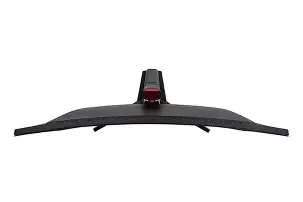
Users often view the 1800R curvature of the Optix G27C as a purely aesthetic choice, but it serves a vital ergonomic and competitive function. The human eye is not flat; it is curved. The R1800 rating means that if the monitors were placed in a circle, the radius would be 1800mm. This specific curve is designed so that the distance from your eye to the center of the screen is virtually identical to the distance from your eye to the corners. This hidden geometric benefit reduces the amount of refocusing your eyes must perform as you scan the UI elements in a game, such as the mini-map in the top right or the health bar in the bottom left. In high-stakes gaming, those microseconds of eye adjustment can be the difference between spotting an enemy or falling to an ambush.
3. Custom Crosshair Overlays and Game Mode Presets
Embedded within the OSD of the G27C are several "Gaming Intelligence" features that are often left untouched. The most notable is the built-in OSD crosshair. For games that lack a precise reticle or for tactical shooters where hip-firing is a necessity, the monitor can project a hardware-level crosshair onto the center of the display. Because this is handled by the monitor's internal processor, it is invisible to streaming software and anti-cheat systems, providing a clean, reliable point of reference. Additionally, the monitor features calibrated Game Mode presets (FPS, RTS, Racing, and Designer). Each of these adjusts the gamma curve and black equalization levels to highlight specific details—such as brightening dark corners in an FPS or saturating colors in a racing title—without blowing out the highlights or introducing artifacts.
4. Adaptive Input Switching and Multi-Port Flexibility
While many budget-oriented 144Hz monitors skimp on connectivity, the Optix G27C includes a DisplayPort, an HDMI 1.4 port, and a DVI port. The "hidden" feature here is the monitor's ability to handle high refresh rates across different interfaces. While many older monitors only supported 144Hz via DVI or DisplayPort, the G27C was ahead of its time in allowing for flexible setups. This makes it an ideal hub for users who want to connect a gaming PC for high-performance play via DisplayPort, while simultaneously keeping a console or a work laptop connected via HDMI. The ability to switch between these inputs seamlessly through the joystick on the back of the monitor allows it to function as a versatile command center rather than just a single-purpose gaming screen.
Find top-rated Electronics products at great prices.
Shop Amazon →5. Black Tuner and Shadow Optimization
The Optix G27C features a sophisticated "Black Tuner" hidden within the color settings. This is distinct from standard brightness or contrast adjustments. Instead of raising the brightness of the entire screen—which would make the image look washed out—the Black Tuner specifically targets the lower end of the luminance scale. By increasing this value, players can effectively see into dark shadows where enemies might be camping, while the bright sky or outdoor environments remain correctly exposed. For competitive players in games with high dynamic range environments, this is a literal game-changer, providing a visual advantage that doesn't rely on in-game settings or brightness hacks that degrade image quality.
Detailed Competitive Analysis: Pros and Cons
To understand the G27C's standing in the current market, it is important to weigh its historical strengths against modern expectations. While newer panels have introduced higher resolutions and HDR capabilities, the G27C remains a staple for those prioritizing frame rates and affordability.
- Pro: Exceptional Contrast Ratio - The 3000:1 VA panel delivers deep blacks and vibrant colors that TN panels cannot match, making it excellent for cinematic gaming and movie watching.
- Pro: Ergonomic Curvature - The 1800R curve provides a more immersive field of view and reduces peripheral distortion, which is beneficial for both work and play.
- Pro: High Refresh Stability - The 144Hz refresh rate is incredibly stable on this model, with very little "overshot" or ghosting when the overdrive settings are properly calibrated.
- Pro: Solid Build Quality - Unlike some modern plastic-heavy monitors, the G27C feels robust, with a stand that offers significant stability, though it lacks some height adjustment features.
- Con: 1080p Density - At 27 inches, the pixel density of 1080p is lower than some users might prefer (approx 81 PPI), which can lead to visible pixels if sitting very close to the screen.
- Con: Narrow View Angles - While much better than TN, VA panels like the one in the G27C can experience color shifting if viewed from extreme side angles compared to IPS technology.
- Con: Limited Stand Adjustability - The stock stand primarily offers tilt; users seeking height adjustment or swivel will need to look into VESA mounting options.
Component and Performance Comparison
The following table illustrates how the Optix G27C compares to general industry standards for gaming monitors in its class, highlighting why the hidden features mentioned above are so relevant to its longevity.
| Feature | Standard 27" TN Monitor | Standard 27" IPS Monitor | Optix G27C (VA Curved) |
|---|---|---|---|
| Contrast Ratio | 1000:1 | 1000:1 | 3000:1 |
| Color Depth | 6-bit + FRC | 8-bit / 10-bit | 8-bit (NTSC 85%) |
| Response Time | 1ms (GtG) | 4ms - 1ms (GtG) | 1ms (MPRT) |
| Curvature | Flat | Usually Flat | 1800R Curved |
| Eye Care | Basic Software | Flicker-Free/Software | Hardware Less Blue Light |
Buying Guide: Is the Optix G27C Right for You?
Choosing a monitor in the 1080p 144Hz category requires a clear understanding of your primary use cases. The Optix G27C is specifically tailored for a few distinct types of users. If you fall into one of the following categories, this monitor offers a compelling value proposition that newer, more expensive 1440p or 4K monitors might not necessarily beat in terms of raw frame-per-dollar efficiency.
The Competitive eSports Player
For players of Valorant, Counter-Strike, or League of Legends, high frame rates are the absolute priority. Because the G27C runs at 1080p, it is much easier for mid-range graphics cards to hit the 144 FPS cap required to take full advantage of the refresh rate. If you have a modest GPU, a 1080p monitor like the G27C ensures you maintain a competitive edge without stuttering or needing to lower your graphics settings to "low" across the board.
The Atmospheric Gamer
If your library consists of story-driven RPGs or horror games, the high contrast ratio of the VA panel is its biggest selling point. You will appreciate the deep shadows and the way the curve wraps the game world around your vision. The G27C excels in titles where immersion is prioritized over pure twitch-reflex accuracy, though it is more than capable of handling both.
The Budget-Conscious Professional
Users who dual-purpose their monitor for home office tasks will benefit from the "Hidden Feature #1"—the blue light reduction. The 27-inch screen real estate provides enough room for side-by-side windows, and the flicker-free technology prevents the midday headache that often accompanies cheaper office monitors. While the 1080p resolution isn't ideal for professional photo editing, the 85% NTSC color gamut is actually quite impressive for general creative work and content consumption.
Shop the latest Electronics picks on Amazon.
Shop Amazon →The Console Hybrid User
With its multi-port setup, the G27C is a great choice for those who want a single screen for their PC and their PS5 or Xbox Series X/S. While the consoles can't hit 144Hz at 1080p in all titles, they benefit from the FreeSync compatibility and the punchy colors. The monitor’s ability to accept various inputs ensures it stays useful even as your hardware configuration evolves.
Maximizing Your Display: Calibration and Setup
To get the most out of the G27C, a small amount of manual calibration is recommended. Out of the box, many monitors are set to a "Store" or "Vivid" mode that enhances brightness but sacrifices color accuracy. By switching to the "User" profile and slightly lowering the Green and Blue values in the color temperature settings, you can achieve a more natural, "D65" standard white point. Furthermore, using the DisplayPort cable included with the monitor is essential for ensuring that FreeSync and the full 144Hz refresh rate are active, as some older HDMI cables may limit the output to 60Hz or 120Hz depending on the source device's architecture.
Positioning is also key with curved displays. To fully benefit from the R1800 curve, the monitor should be placed approximately 2.5 to 3 feet away from your eyes. This distance ensures the curve aligns perfectly with your natural peripheral vision. If the monitor is too close, the edges may feel like they are "pinching" the image; too far, and the benefits of the curve are minimized. Adjusting the tilt so that the top third of the screen is at eye level will also prevent neck strain and keep the viewing angle optimal for the VA panel's characteristics.
Final Thoughts on the Optix G27C
The Optix G27C is a testament to the idea that a well-engineered piece of technology can remain viable long after its successors have hit the shelves. While it may not boast the pixel counts of the latest 4K displays, its "hidden" features—from the hardware-level eye care to the specific geometry of the R1800 curve—make it a deeply thoughtful product. It balances the high-octane needs of the gamer with the practical, daily needs of the general computer user.
Understanding these features allows owners to move beyond the marketing stickers on the bezel and truly tune their visual experience. Whether it is using the Black Tuner to gain a tactical advantage in a dark corridor or leveraging the Less Blue mode to finish a late-night project, the G27C offers a depth of utility that is rare in the entry-to-mid-level monitor market. For those looking for a reliable, high-contrast, and immersive display, this monitor remains a standout choice that prioritizes what buyers truly care about: performance, comfort, and longevity.